KINGFISHER CLEAN BLOG
7 Steps to Safely Clean a Confined Space
Confined space cleaning is high-risk work that requires careful planning and the right expertise. Here’s how our professional team at Kingfisher does it, safely and effectively.
Contents: 7 steps to safely clean a confined space
Introduction – what counts as a confined space?
1. Assess the risks and plan ahead
2. Isolate the space and get authorisation for entering
3. Ventilate and test the atmosphere for hazardous gases
4. Wear the right PPE
5. Have a standby person and emergency rescue plan
6. Start the clean!
7. Remove waste safely and get the project signed off
Conclusion – less about the clean, more about preparation and safety

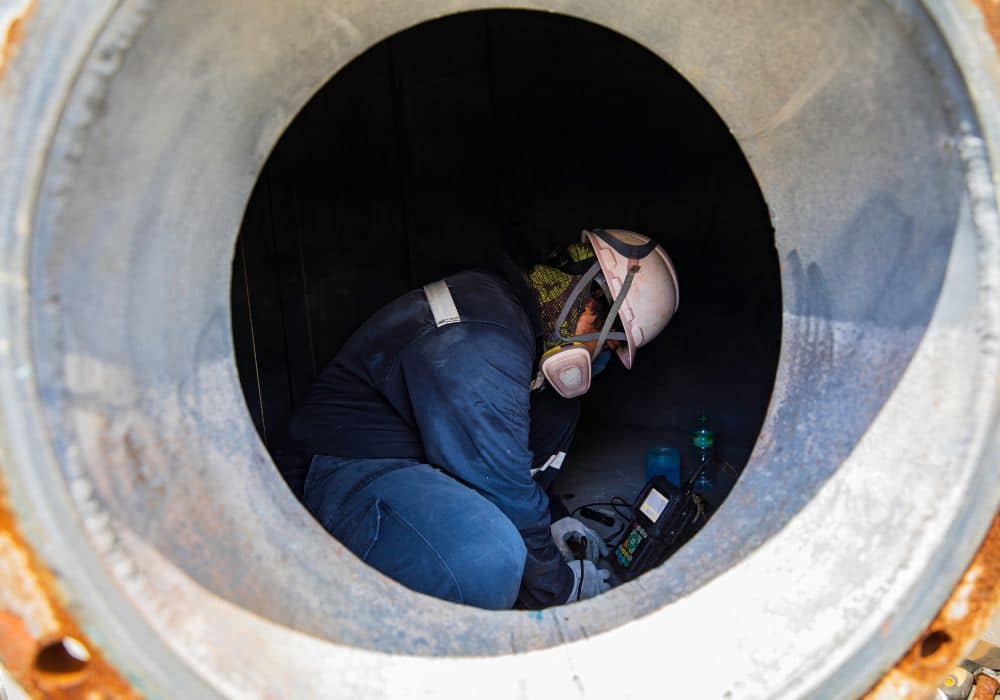
Confined space cleaning is one of the most high risk and specialised jobs in industrial cleaning. Industrial sites are hazardous enough – but introducing tanks, silos, underground pits or other inaccessible areas can increase the risks exponentially.
What counts as a confined space?
A confined space is any enclosed or partially enclosed environment where the risks of serious injury are significant due to limited access, poor ventilation or the presence of hazardous substances, which we’ve written about in detail in this blog post.
1. Assess the risks and plan ahead
As with any industrial cleaning work, a thorough risk assessment must be carried out before any work begins, to identify potential hazards. This should always be tailored to the situation at hand, therefore a site visit is essential during the planning stage of the project.
2. Isolate the space and get authorisation for entering
If the confined space has any electrical components, moving machinery, valves, or other types of sensitive equipment, these should be isolated and switched off before any work begins.
A permit-to-work should be obtained by the cleaning supervisor to ensure that RAMS have been approved and authorisation has been given for operatives to enter the area safely.
Got an industrial cleaning or painting problem? We can help.
3. Ventilate and test the atmosphere for hazardous gases
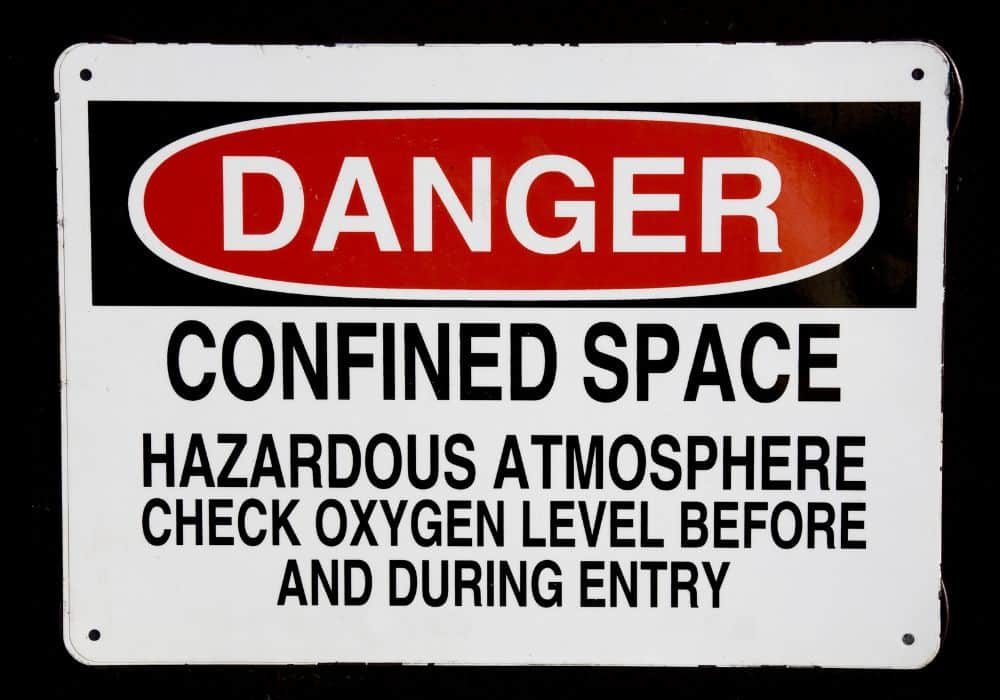
Having adequate ventilation is essential. Without it, dangerous gases can build up or oxygen levels can drop without you realising. Atmospheric conditions must be continuously monitored throughout the clean using a calibrated gas detector, which can alert you to any unexpected changes.
4. Wear the right PPE
All operatives entering the confined space must wear the proper PPE. This could include respiratory protection (e.g. air fed masks), safety harnesses and lifelines, hard hats, gloves, safety glasses and steel toed boots.
5. Have a standby safety banksman and an emergency rescue plan
It’s important to have at least one standby operative throughout the clean who’s responsible for monitoring atmospheric levels and maintaining constant communication with the cleaning team. An emergency plan must be in place before work starts, including procedures for evacuation, should something go wrong. The standby person must be ready to initiate rescue procedures in the event of an accident or unsafe atmospheric changes.
6. Start the clean!
With confined space cleaning, it can feel like more time and effort goes into preparation than the clean itself – and that’s by design. Careful planning is what keeps everyone safe.
Once the team are properly kitted up and everything is in place, the work can start. Depending on the space and the type of material that needs cleaning, methods can include:
- Mechanical cleaning like brushing, scrubbing or scraping
- High pressure jet washing
- Chemical cleaning for residues, biofilm or bacteria
- Industrial vacuuming for bulk debris, dust or sludge
- Needle guns or grinding for rust and paint coatings
Of course, as with any industrial cleaning project, the aim is to remove any hazardous or unwanted buildup while minimising risk.
7. Remove waste safely and get the project signed off
All waste, whether it be sludge, dust or debris, must be disposed of carefully and according to the relevant environmental and safety regulations for that industry.
Once the clean has been completed to a satisfactory standard, the work should be approved by the client to ensure both parties are happy with the result.
Less about the clean, more about the prep
As mentioned above, the preparation and planning stage of confined space cleaning is just as important as the physical cleaning itself. This is certainly true for Health & Safety planning; safety must be the number one priority throughout the entire process.
That’s why it’s extremely important to partner with a trained, experienced team of industrial cleaners whenever you need confined space cleaning. The risk of cutting corners is simply too high. It’s essential to select a team that can combine technical expertise with a safety first approach.
Our confined space cleaning team at Kingfisher are trained, experienced, and ready to tackle all manner of confined space environments and cleaning challenges – so you don’t have to.
Industrial Cleaning and Painting that works for you.
Get in touch for a free site consultation and project plan.
0330 043 3174
info@kingfisher-ss.co.uk
Our team here at Kingfisher have been in the industrial cleaning business for over 40 years. In that time we’ve built a reputation of being able to solve industrial cleaning problems where other companies have fallen short.
That’s because we will always source the highest quality equipment, materials and training to complete the project, often developing bespoke solutions for the trickiest of tasks.
0 Comments