
KINGFISHER CLEAN BLOG
How Poor Industrial Cleaning Contributes to Unplanned Downtime in Manufacturing
This article discusses SIEMENS’ latest 2024 report on downtime for manufacturers and the eyebrow raising cost of every lost hour. We also discuss the relevance of industrial cleaning – of how competent cleaning can reduce the length and risk of unplanned downtime, while poor cleaning can exacerbate it.
Skip to the information you need >>
1. Uncomfortable, yet also promising, downtime statistics
2. Cutting to the chase – how industrial cleaning fits in
3. Planned downtime and good industrial cleaning
4. Planned downtime and poor industrial cleaning
5. Unplanned downtime and good industrial cleaning
6. Unplanned downtime and poor industrial cleaning
7. A proactive vs a reactive mindset
8. Using downtime wisely, and the risks of poor organisation

Uncomfortable, yet promising, downtime statistics
It’s no secret that production is king in the manufacturing sector. Every hour of quiet across the shop floor could equate to thousands – if not tens or hundreds of thousands – of lost revenue.
Siemens’ The True Cost of Downtime 2024 Report shares both enlightening yet eyebrow raising statistics concerning downtime in manufacturing. Perhaps the most shocking statistic is that the world’s 500 biggest companies lose approximately $1.4trillion through unplanned downtime annually, totalling 11% of revenue. That’s equivalent to the annual GDP of a major industrialised nation such as Spain.
Successful efforts have been made in recent years to reduce the amount of unplanned downtime across large manufacturing sites. Average downtime hours reduced from 39 hours a month in 2019 to 27 hours in 2024. Unfortunately, despite these improvements, costs per hour have dramatically increased, rising by 113% in the automotive sector and as much as 319% in heavy industry.
The average amount of downtime incidents per plant has also fallen, from 42 in 2019 to 25 in 2024. For heavy industry, total downtime hours in 2024 were reduced to just one third of 2019 levels. These trends reflect the positive steps manufacturers have taken to reduce downtime, with predictive maintenance playing a large role in helping factories identify when their machines need attention.
The bottom line indicates that, while manufacturers have successfully reduced the amount of unplanned downtimes across their sites, the cost per hour has increased significantly. This reinforces the need to invest in predictive maintenance strategies – and, we believe, industrial cleaning should play a significant role in this.

Cutting to the chase – how industrial cleaning fits in
When searching for “reasons for unplanned downtime”, admittedly ‘lack of cleaning’ doesn’t show up all that often. However, we believe that industrial cleaning doesn’t get talked about nearly enough when it comes to downtime, whether that’s planned or unplanned. Unfortunately, we experience all too often that industrial cleaning is either a lower priority or a very last minute consideration, which causes manufacturers stress, time, and most importantly, money.
But in reality, the difference between good, poor or no industrial cleaning can make the world of difference when you’re trying to restart production. Here’s how:
Planned downtime and good industrial cleaning
This combination is the golden ticket. When planned effectively, planned maintenance is the perfect opportunity to schedule industrial cleaning. It allows professional teams to access areas that otherwise would be unsafe to access while production is running or areas that would contaminate products.
Our cleaning teams use these opportunities to clean high level areas, production machinery, assembly and production lines, confined spaces, and any other inaccessible areas.
When you partner with a company that’s reliable, punctual and delivers a stellar service, you know that you’re getting the best possible clean in the time that you have available. A professional team will arrive fully suited up in the correct PPE and will work diligently while not getting in your way, meaning that you can restart production smoothly and on time.
Planned downtime and poor industrial cleaning
If you don’t plan your time efficiently during planned shutdowns, or if areas don’t get cleaned properly, then you risk starting up production with dirty or below standard machines. Or, even worse, you risk pushing back the start of production so that you can finish what you need to. You’ve then wasted your golden opportunity to schedule in cleaning when your site is already shut down, which also means you’ve wasted time and money for little returns.
Unplanned downtime and good industrial cleaning
Let’s imagine for a moment that the worst happens – say you experience a fire on site, or you fail an inspection because your high level infrastructure is covered with a thick layer of dust, and you have to stop production until it’s resolved. You have to clean up the areas quickly and efficiently so that production can restart, and with every passing hour you’re losing money. If you’re partnered with a reliable, competent and fully mobile industrial cleaning company, you know that you have a team that you can depend on to be on site as soon as possible.
Unplanned downtime and poor industrial cleaning
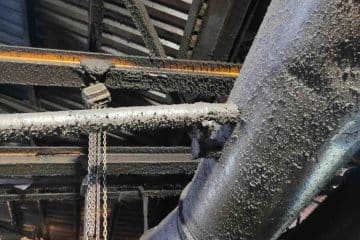
This unfortunately is the worst combination for causing unnecessary and prolonging unplanned downtime. If you don’t keep on top of regular industrial cleaning, dust, grime and debris can build up on almost every surface of your factory, which can cause strain on moving parts or increase the risk of fires. Not only can this bring on unexpected shutdowns as described above, but if you then pair this with ineffectual industrial cleaning after the fact, you prolong the time required to get production back up and running. At the top end, this can cost more than $600 (£450) a second.
A proactive vs a reactive mindset
All this boils down to the well known phrase, “you fail to plan, you plan to fail”.
Many manufacturing sites still operate – knowingly or unknowingly – on a “run to failure” mindset, where maintenance is only triggered when something goes wrong or a compliance failure has already occurred. While this can appear cost effective in the short term, instead you just end up deferring the problem to a later time. Inevitably, this involves a desperate scramble trying to clean areas after an emergency to get production back up and running. A proactive approach treats industrial cleaning as a way of fixing problems before they become a larger issue.
Using downtime wisely, and the risks of poor organisation
SIEMENS’ recent report has shown that predictive maintenance has made significant progress since 2019 in reducing the amount of downtime hours experienced by large manufacturers. However, the real risk now is how expensive every lost hour has become.
Clearly, keeping a close eye on the performance of your machinery, and predicting when breakages are about to occur, helps you plan an effective maintenance strategy. So why not do the same with cleaning?
Use your planned shutdowns wisely to focus on cleaning that otherwise gets missed. Conversely, if and when the worst does happen, partner with a fully mobile, capable and effective industrial cleaning company to be on site ASAP to help get your site back up and running.
Industrial Cleaning and Painting that works for you.
Get in touch for a free site consultation and project plan.
0330 043 3174
info@kingfisher-ss.co.uk
Our team here at Kingfisher have been in the industrial cleaning business for over 40 years. In that time we’ve built a reputation of being able to solve industrial cleaning problems where other companies have fallen short.
That’s because we will always source the highest quality equipment, materials and training to complete the project, often developing bespoke solutions for the trickiest of tasks.

1 Comment
новини · April 11, 2026 at 3:34 am
Really solid work that delivers on every promise. The resource
is far above average.