
KINGFISHER CLEAN BLOG
How to Remove Rust from Metal in Factories & Industrial Sites
Rust can quickly become a problem for your site if not kept in check. Keep reading to learn how you can remove rust from metal and protect your metal surfaces from future corrosion.
In this blog you’ll learn…
1. How rust can present significant risks for your industrial site
2. How does rust form?
3. Precautions for safeguarding against rust
4. 7 different ways to remove rust
5. 5 different ways to prevent rust
6. The rust removal and treatment method we think is best
7. Reasons to partner with an industrial cleaning company to remove rust

Rust can present a significant risk for your industrial site – in more ways than you think
Rust may seem like a minor inconvenience at first glance, or may be docked as a low priority issue if it’s in an out of the way place, but it can be a major hazard. Rust can weaken metal structures if left to spread, or at the very least be unsightly for your visitors and customers.
In extreme cases, it can impact the performance of your machinery or lead to compliance issues with contamination or risks of structural collapse.
Rust also has the unfortunate ability to keep coming back if not treated correctly. Allowing even a small amount of moisture, treating the rust on a rainy day, or not choosing the appropriate treatment method could lead to your repair efforts being done ultimately for nothing. This leads to extra time, effort and money wasted on trying to protect your industrial site.

That’s why it’s extremely important to protect your industrial assets from rust before it has a chance to form. Or, in cases where rust has developed, to treat it quickly with a method that’s best suited to the case at hand, with consideration to both the type of surface and the condition of the rust.
How does rust form?
Rust forms naturally through a process called oxidation. It occurs when iron or its alloys (like steel) are exposed to moisture and oxygen over time. Corrosion, on the other hand, can include rust but includes any type of metal or non-metal oxidation, whereas rust refers only to iron oxidation.
Iron oxide (rust) slowly eats away at the metal causing pits and cracks, which weakens the structural integrity over time and even leads to holes and gaps in the metal.
High humidity, chemical exposure and higher temperatures can increase the rate at which rust develops; all of which are obviously present in industrial environments where conditions can be harsh.
Understanding how rust is formed and how the process is accelerated in industrial environments is important for putting together a prevention plan and, if necessary, repairs and mitigations for the future.
Rust can easily develop across your industrial site if precautions aren’t taken
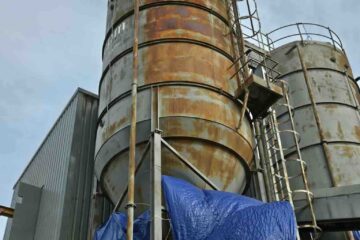
Whether it’s on pipelines, storage tanks, machinery or steel infrastructure, rust can spread quickly once it starts. We find that industrial rust is most common on machinery and infrastructure built a decade ago and beyond, where rust prevention may not have been thought of when it was installed, or where prevention coatings like galvanising or painting have degraded over the years.
Regular inspections of your industrial assets are important to keep on top of, so that you know what areas of your site are at most risk, and which areas are of high priority. It’s easy to become complacent or lose track of areas that might be at risk, especially with larger sites.
Of course, it’s easier to prevent rust from forming if precautions are taken at the time of installation, as we’ll talk about below. Or, if the damage has already been done, it’s best to treat the area with rust-resistant methods to protect it from coming back in the future.
7 different ways to remove rust from metal
Chemical
1. Weak acids
- Weak acids like oxalic or citric acid can dissolve early stages of rust, and can be found in household cleaners or foods like lemons and limes.
- Weak acids are less caustic and therefore less dangerous to use than stronger acids.
- Weak acids aren’t strong enough to deal with rust in industrial environments, and are perhaps best suited to small cases of rust in domestic or commercial spaces.
2. Strong acids or alkalis
- Strong acids and alkalis can react with rust and dissolve it.
- However, they are highly caustic and dangerous to work with, and will likely eat away at most other surrounding surfaces and maybe even the metal underneath that you want to keep protected.
- Strong acids should only be used by trained professionals; other methods are preferable from a health and safety point of view.
- Strong acids present issues in terms of safe disposal.
3. Water based chemicals
- Water based chemicals can be applied to dissolve the rust and lift it from the underlying material.
- Parts can also be immersed in rust removal baths.
Mechanical
Metal can be scrubbed mechanically to remove the rust. However, there are different types of machine that each come with their own pros and cons.
4. Shotblasting
- Shotblasting machines will spray an abrasive medium at high pressure at a surface to remove the rust. This can be an effective method of removing rust back to bare metal.
- There are many different abrasives to choose from, however each come with their own benefits and Health & Safety risks.
- Creates a lot of mess and airborne particles that require respiratory PPE; the sheer amount of waste produced makes this an inconvenient method for tight areas or high level areas.
5. Grinding
- Metal grinders can be handy for removing the loose rust in small areas.
- Grinding large areas may be labour intensive and time consuming.
6. Needle guns/needle scaling
- Needle guns are both portable and effective for spot treating rust patches or large areas of old paint.
- They are safer to use at height as the only “abrasive” involved is compressed air, meaning less waste is produced. This also reduces operational costs.
7. Electrolysis
- Adding an electrical current to the metal can dissolve and remove rust.
- This can be a dangerous method as it releases toxic chemicals and fumes.
5 different ways to prevent rust
1. Galvanising
- Dip or coat the metal in a thin layer of additional metal, usually zinc or another metal that’s more reactive than iron .
- The galvanising layer will therefore oxidise instead of the iron underneath, protecting it.
- Surfaces can be dipped in galvanising solution or sprayed in situ with professional specialist kit.
2. Painting
- Painting adds another layer of protection to the metal that moisture needs to get through before it can affect the iron or steel.
- Rust inhibiting industrial paint adds an extra layer of protection that addresses the rust directly.
3. Regular maintenance
- Keep close eye on areas where rust is forming or shows signs of forming, as it can be easier to treat in small areas.
- Keep an eye on where paint, galvanised areas or other anti-rust coatings might be failing or degrading.
- Keep areas clean and free of grime build up.
4. Lubricant
- Lubricating the metal creates a barrier between the surface and any moisture or oxygen in the air.
- However, this is obviously not a permanent solution and needs to be applied regularly.
- Surfaces will become dirty very quickly.
- Lubricants are perhaps only a feasible option for moving machinery.
5. Rust inhibitors and converters
- Rust inhibitors and converter are chemicals that create a barrier between the metal and the air, preventing oxygen and water from reaching the surface.
- They are available in various forms:
- Rust inhibiting paint
- Rust converter chemicals
- Rust inhibiting oil
The rust removal and treatment method we think is best
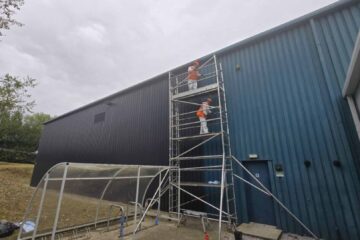
We use needle guns (also known as needle scalers) for our projects as they effectively remove paint and loose rust from metal surfaces prior to painting. While they may not take the surface back to bear metal, if you use the correct primers and rust-inhibiting paints, then you don’t need to.
We believe that rust is best removed and treated with a combination solution. We use needle gun scaling on account of its health and safety benefits when compared to shotblasting, acids or other methods of removing rust. We then treat and prepare the surface for painting with a rust inhibiting converter that creates a barrier between the metal and the paint; essentially, a paint primer that effectively destroys and converts rust. We then paint the surface with rust-inhibiting paint for a further layer of protection.
We believe that this method provides the best balance of a high standard of rust removal and protection, alongside maintaining health and safety. While there are many methods of effective rust removal like shotblasting and acids, the health and safety risks make these too dangerous when weighed against the results.
Industrial rust removal and prevention needs to take into account the stage of rust corrosion, where the rust is (for instance, in hazardous areas like industrial basements or at high level), and how the subsequent waste will be disposed of.

Reasons to partner with an industrial cleaning company to remove rust from metal
In short, it’s much cheaper to invest in rust treatment and prevention services than having to replace infrastructure or machinery due to corrosion.
Partnering with an industrial cleaning and painting company can offer you the best combination of removal, treatment and painting to both repair and protect your rusted surfaces at the same time. Having the right company on your roster also frees up your team to do the jobs they’re meant to do.
Industrial Cleaning and Painting that works for you.
Get in touch for a free site consultation and project plan.
0330 043 3174
info@kingfisher-ss.co.uk
Our team here at Kingfisher have been in the industrial cleaning business for over 40 years. In that time we’ve built a reputation of being able to solve industrial cleaning problems where other companies have fallen short.
That’s because we will always source the highest quality equipment, materials and training to complete the project, often developing bespoke solutions for the trickiest of tasks.
0 Comments