KINGFISHER CLEAN BLOG
How Weather Can Affect Industrial Painting
All exterior industrial painting projects are unfortunately subject to the unpredictability of UK weather. Learn how different weather patterns can impact industrial paints, and more importantly, how to plan accordingly.
Contents: How Weather Can Affect Industrial Painting
1. Weather plays a pivotal role in outdoor industrial painting projects
2. Different weather types and their effect on industrial painting:
Warm and sunny
Wind
Rain
Cold temperatures
Humidity
3. What’s the worst type of weather for industrial painting?
4. What’s the best type of weather for industrial painting?
5. Another consideration – exposure to UV
6. Another consideration – using paint that will adapt to the weather
7. Final considerations

Weather plays a pivotal role in industrial painting projects
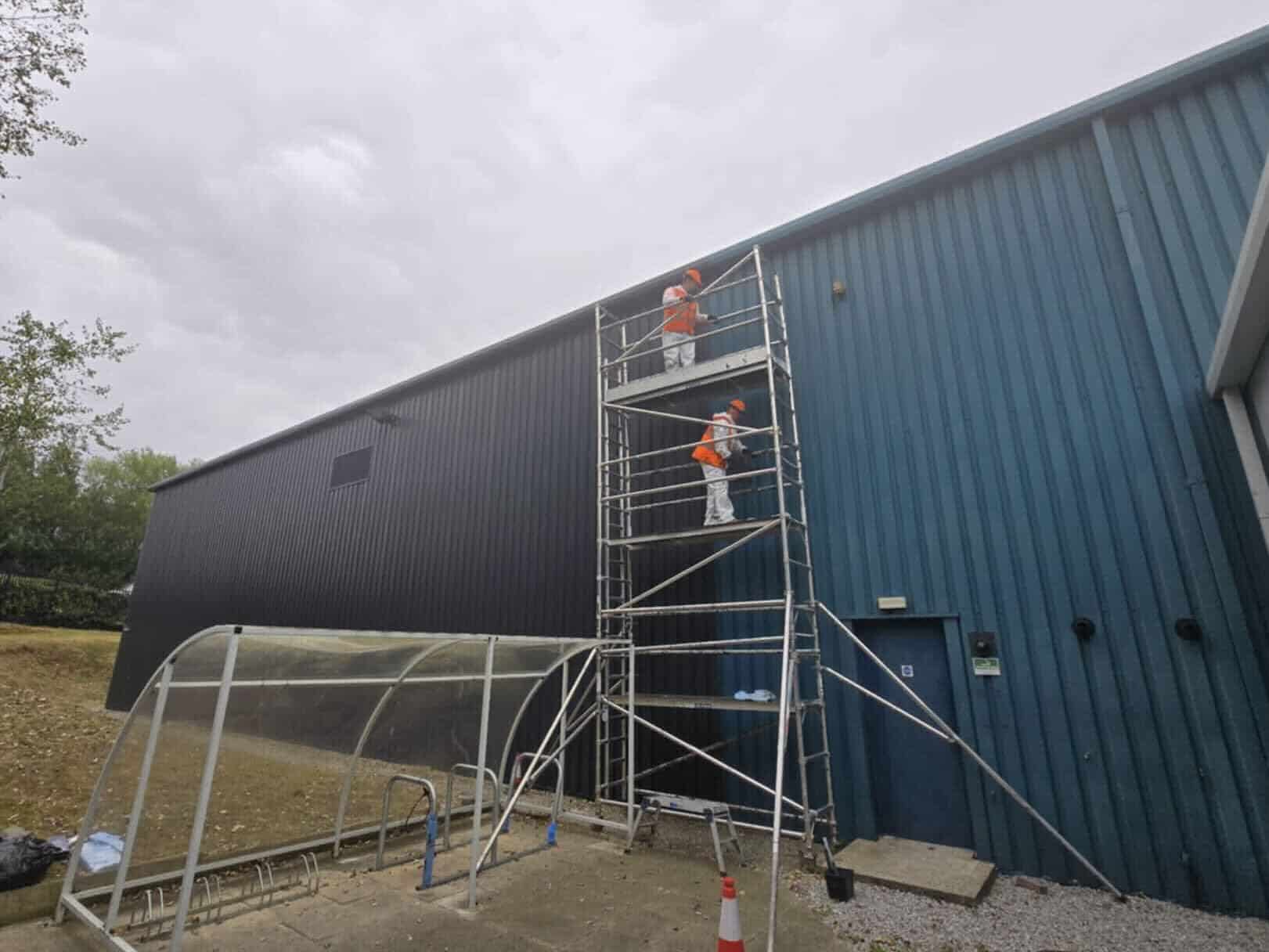
Any outdoor industrial painting project, whether it be external cladding or storage tanks, will be susceptible to the weather. Unfortunately, in a country like the UK where weather can be unpredictable and often leans toward the rainy side, this can cause some issues.
However, no matter the weather, industrial assets still need to be painted and protected. That’s why it’s vital to plan industrial painting projects around the weather wherever possible, and work it to your advantage.
Different weather types and their effect on industrial painting:
Warm and sunny
You might think that warm, sunny, summer days are perfect for industrial painting, but funnily enough this often isn’t the case. Most painting projects on industrial sites almost always involve painting a metal substrate, which can heat up significantly under direct sunlight.
Even in ambient temperatures, the temperature of a metal substrate under direct sunlight can reach over 40℃. This can happen in mere minutes. In most cases, this will make industrial paints dry too quickly and result in a patchy, uneven finish – far from ideal when you’re looking for a sleek and professional result.
How to plan around sunny weather:
It’s essential to bring along a surface temperature thermometre that can measure the temperature of a substrate at any given time. If the sun comes out and the metal heats up beyond what is suitable for the paint, stop. It’s better to wait for favourable conditions than to risk ruining the paint job.
It’s also a good idea to start work early in the summer as soon as the sun rises, so you can get a few good hours in before the temperature rises too high in the middle of the day. Start on a west facing wall and follow the shade throughout the day.
Wind
Wind, for the most part, isn’t the worst type of weather to paint in, compared to other conditions. However, as with sun, it may cause the paint to evaporate too quickly which can prevent it from adhering to the surface properly. It may also cause debris or dust to blow onto a freshly painted surface, which could ruin all of your hard work. As with any industrial painting project, the job should be planned on a case by case basis and, if possible, tarpaulins can be erected to shelter the area.
Perhaps the most significant hazard of painting in the wind is if you are working at height using MEWPs. As with any job performed at height, it’s incredibly important to pay attention to wind speeds and only operate the machine when it’s safe to do so.
How to plan around windy weather:
If you need to paint on a particularly windy day, it may be a better idea to wait for favourable conditions or paint at low level until it’s safe to work at height again. It may also be possible to erect tarpaulins to protect wet surfaces from debris.
Rain
Rain is the heavy hitter. Obviously, it’s not favourable to work in the rain, as it can severely set back or even damage work you’ve already completed.
Rain is particularly risky during the preparation stages of a painting project when abrasive blasting or mechanically prepping metal to remove rust. Moisture can cause flash rust to develop, or it can become trapped under paint layers to rust over time. Neither is good for the durability or aesthetics of the paint.
How to plan around rainy weather:
When painting areas such as exterior cladding or storage tanks, it can be incredibly difficult to shield surfaces from the rain with tarpaulins or coverings. Therefore, scheduling your project around rainy days is essential. Make sure the substrate is clean and dry before any work begins.
Cold temperatures
Painting in the cold may negatively affect the paint itself. It may become thicker, cause excessive film buildup, or become more difficult to mix. Depending on whether you are using single or two pack paints, low temperatures can impede the necessary chemical reactions between the base and hardener, which can stop the paint from curing properly.
A key consideration for cold weather is to paint at least 3℃ above the dew point – the temperature at which water vapour condenses. The dew point is dependent on temperature and humidity, so it’s important to monitor the weather closely and calculate the threshold daily.
How to plan around cold weather:
Follow the paint manufacturers’ guidelines and monitor humidity levels to calculate the dew point. If the temperature is lower than 3 degrees above the dew point, don’t proceed. If conditions are safe for painting but still cold, operatives should wear thermal clothing alongside necessary PPE.
Humidity
Humidity is defined as the percentage of moisture in the air. At any given temperature, air can only hold so much moisture. If humidity is too high, it slows or prevents the curing and drying process. It can also cause moisture to become trapped under paint layers and significantly increase the risk of flash rust.
It is often advised that you should not paint above 85% humidity, as you are likely to hit the dew point regardless of the temperature. However, it’s important to check and calculate conditions on a case-by-case basis.
How to plan around humid weather:
As with cold weather, follow the paint manufacturers’ guidelines for the paint’s advised humidity ranges and monitor humidity levels closely to calculate the dew point. Where possible, schedule the working day around hours where humidity is lowest.
What’s the worst type of weather for industrial painting?
The two largest factors impacting industrial painting are temperature and humidity, as they directly affect the physical and chemical behaviour of the paint both during application and curing. If it’s raining or the humidity is too high, it’s best to reschedule. The same applies if temperatures are extremely hot or extremely cold.
What’s the best type of weather for industrial painting?
Industrial paints are chemically designed to work within specific environmental parameters. When painting outside, the most favourable conditions are usually overcast, with ambient temperatures, little to no wind, and no risk of rain.
Another consideration – exposure to UV
A primary cause of protective coating failure is down to UV exposure, as it can cause chemical bonds to break down, leading to faded colours or chalking. Prolonged exposure can also cause paint to become brittle, crack or peel off.
Fortunately, most high quality industrial paints today – especially two pack systems such as polyurethanes – are UV resistant and can mitigate these effects. It’s important to choose a high quality paint that can withstand environmental stress so that it doesn’t fail prematurely.
Another consideration – using paint that adapts to the weather
Most substrates will expand and contract in hot and cold temperatures, therefore it’s important to use a coating that remains flexible and can endure these changes. An inflexible coating is more likely to become brittle and crack.
Final considerations
UK weather can be notoriously unpredictable. That’s why it’s better to schedule industrial painting projects during the spring and summer months where possible, when the chance of good weather is higher.
Adverse weather can, at best, hinder your progress – or at worst, cause further rust to the substrate. It’s vital to pay close attention to the humidity, temperature, surface temperature, wind speeds and chance of rain. When teams are proactive and plan around the weather, they set themselves up for a successful painting result.
Industrial Cleaning and Painting that works for you.
Get in touch for a free site consultation and project plan.
0330 043 3174
info@kingfisher-ss.co.uk
Our team here at Kingfisher have been in the industrial cleaning business for over 40 years. In that time we’ve built a reputation of being able to solve industrial cleaning problems where other companies have fallen short.
That’s because we will always source the highest quality equipment, materials and training to complete the project, often developing bespoke solutions for the trickiest of tasks.
0 Comments