
KINGFISHER CLEAN BLOG
Safer Alternatives to Shotblasting for Industrial Painting Prep
Surface preparation is probably one of the most important steps in an industrial painting project. While shotblasting has been a traditional method in the past for removing old paint, scale and rust, we believe that it presents several safety concerns compared to other alternatives.
Surface preparation is the key for industrial painting preparation
Surface preparation is probably one of the most important steps in an industrial painting project. If a surface isn’t prepared properly, the chosen paint may not adhere properly or the intended protection may not be as effective. However, there are many different ways to prepare an industrial surface for painting, and each have their merits and disadvantages.

While shotblasting has been a traditional method for industrial painting prep in the past, we believe that this method has several drawbacks and safety concerns that no longer make it a go-to solution. In this blog, we’ll explore the different types of shot blasting and their alternatives, namely needle guns (also known as needle scalers) and ice blasting. We’ll then explain why we find the latter methods to be safer and more effective compared to shotblasting, especially in the hazardous industrial environments in which we work.
Is your industrial site in need of painting, rust removal, fire protection or general TLC? Check out our range of specialist industrial painting services.

Different types of shotblasting for industrial painting prep
Shotblasting involves propelling an abrasive medium at high speeds at a surface in order to remove paint, debris, rust and other substances that are stuck to the material. In industrial settings, these surfaces are usually metal. There are many different types of abrasive that will give you varied results, whether its taking the surface back to bare metal, or simply to roughen the surface profile ready for painting.
Two common categories of shotblasting include air blasting an abrasive through a portable nozzle, or wet blasting, where water acts as a binder to stop too much abrasive from becoming airborne. Abrasives can include a wide range of materials such as sand, coal slag, glass beads, steel grit, walnut shells, soda, silicon carbide and more. Sand in particular has fallen out of favour in recent years due to the risk of respiratory disease; however, there are many other options out there. The process for all types is for all intents and purposes the same; the agitation of the abrasive at high speeds against a surface knocks off any contaminants from the material.
The drawbacks of shotblasting
There’s no doubt that shotblasting is an effective method of surface prep for industrial painting, which obviously mostly involves metal surfaces, for instance steel girders, tanks, corrugated walls, etc. Shotblasting will in most cases strip the surface back to bare metal prior to painting.
However, the nature of industrial environments, manufacturing facilities, factories and warehouses mean that shotblasting often isn’t a viable solution, both logistically and for safety concerns. Here’s why:
1. Shotblasting is dangerous working at height
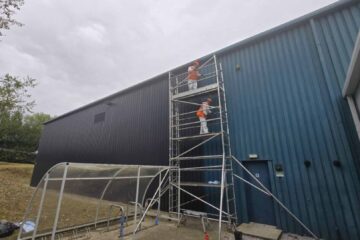
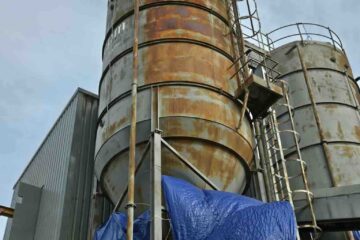
A lot of our painting projects involve working at height, whether it be needing scissor lift access for steel girders, or cherry pickers for the top of storage silos. Shotblasting releases significant amounts of waste from whatever abrasive is used, which, when working at height, can pose serious risks. Containment is therefore of course a more difficult issue.
Needless to say, our team are extremely strict with wearing the appropriate PPE to keep our operatives safe, however falling waste can land on the ground below, causing health and safety risks for personnel and machinery. We believe this is perhaps the largest disadvantage where shotblasting is concerned.
2. Lots of cleanup is required
Shotblasting generates significant dust and abrasive waste which needs to be cleaned throughout and after the job. Depending on the location and the type of abrasive, there is the chance that the collected waste can be recycled back into the machine, however this needs to be sorted beforehand which can be time consuming. More often than not, the abrasives will have to be disposed of at landfill.
3. Shotblasting could cause more surface damage
Shotblasting in some cases can actually be too abrasive, and can potentially damage surfaces more, especially if the surface is heavily corroded.
Industrial Cleaning and Painting that works for you.
Get in touch for a free site consultation and project plan.
0330 043 3174
info@kingfisher-ss.co.uk
Our team here at Kingfisher have been in the industrial cleaning business for over 40 years. In that time we’ve built a reputation of being able to solve industrial cleaning problems where other companies have fallen short.
That’s because we will always source the highest quality equipment, materials and training to complete the project, often developing bespoke solutions for the trickiest of tasks.
Advantages of using needle guns (also known as needle scalers)
We use needle guns (also known as needle scalers) for our projects as they effectively remove paint and loose rust from metal surfaces prior to painting. While they may not take the surface back to bear metal, if you use the correct primers and rust-inhibiting paints, then you don’t need to.
Needle guns are both portable and effective for spot treating rust patches or large areas of old paint. They are safer to use at height as the only “abrasive” involved is compressed air, meaning less waste is produced. This also reduces operational costs.


Ice Blasting; another alternative to shotblasting
Ice blasting machines, which include both wet ice (“normal” ice chips) and dry ice (CO2 pellets), offer an environmentally friendly and low cost alternative to shotblasting in industrial settings.
Dry ice blasting can be extremely effective for sensitive areas such as electricals, as it uses solid CO2 pellets as a cleaning medium which then sublimate into a gas upon impact. Waste is therefore kept to a minimum, however the abrasive quality isn’t strong enough to remove paint, rust or other tough adhered material.
Wet ice blasting machines offers a more environmentally friendly abrasive technique to prepare industrial surfaces. They use about 10% of the water of pressure jet washer machines, immediately minimising the amount of waste produced.
Conclusion; logistics and safety have to play a part in industrial painting preparation
While shot blasting has its place in industrial maintenance, and is no doubt an effective method of stripping metal back for painting preparation, we believe that the safety and logistical drawbacks make it not suitable for industrial painting projects.
When industrial environments require working at height, or working in hazardous environments, the safety of the working method must be as important, if not more so, than merely the result alone. That’s why we choose needle guns or ice blasting machines on a case-by-case basis according to the site layout and the condition of the metal. When paired with industrial primers and rust-inhibiting paint, the results will protect your surfaces for years to come.
Have an issue with your industrial cleaning or painting? We’ve got you covered.
Get in touch with some details about your problem and we’ll get back to you within one working day.
0 Comments