KINGFISHER CLEAN BLOG
What’s the Difference Between Single Pack and Two Pack Painting?
The primary purpose of industrial paints is to protect the surface being painted – but what is two pack painting and single pack painting, and what makes them different?
Contents for single pack vs two pack painting
1. What kind of paint does your site actually need?
2. Two pack vs single pack: what’s the difference?
3. Key differences: infographic
4. When to use two pack paint
5. Safety and handling
6. Common types of industrial paints (and what they’re good for)
7. FAQs
8. Match the paint to the problem

Industrial painting on site – what kind of paint does your site actually need?
When industrial assets on site start to rust, peel or look worn, you know it’s time for a repaint. But that often raises a key question: what kind of paint should you use? With so many coatings available – from standard metal paints to high performance two pack polyurethanes – choosing the right system can feel overwhelming.
If you’re managing an industrial site, factory, or warehouse, you’re likely looking for a paint that will last, protect your assets, and not give you too much downtime while it’s being applied. In this guide, we’ll explain the key differences between two pack paints and other industrial coatings, so you can choose the right solution for your site.
Single pack vs two pack painting: what’s the difference?
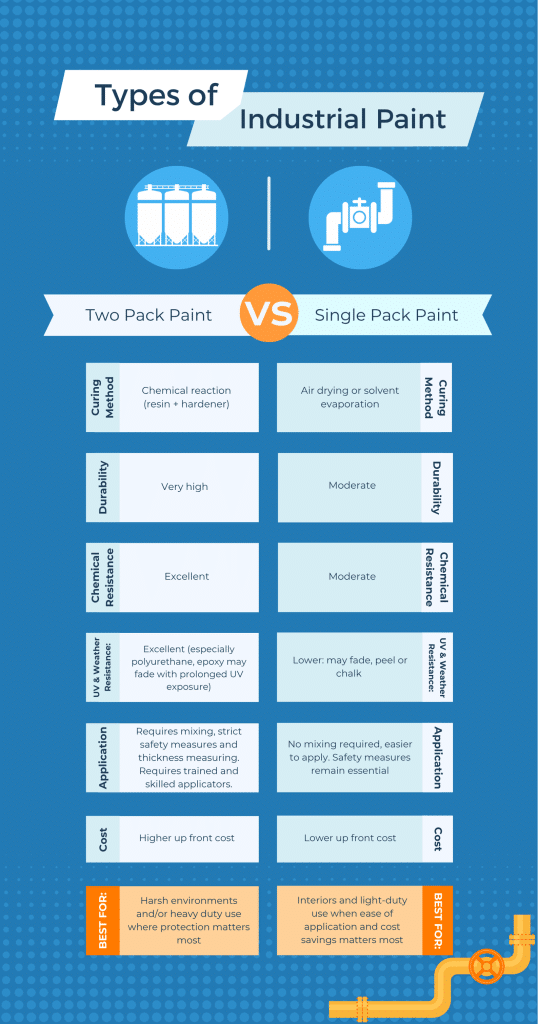
The core difference between two pack and single pack paints comes down to how the paint cures.
Two pack paints
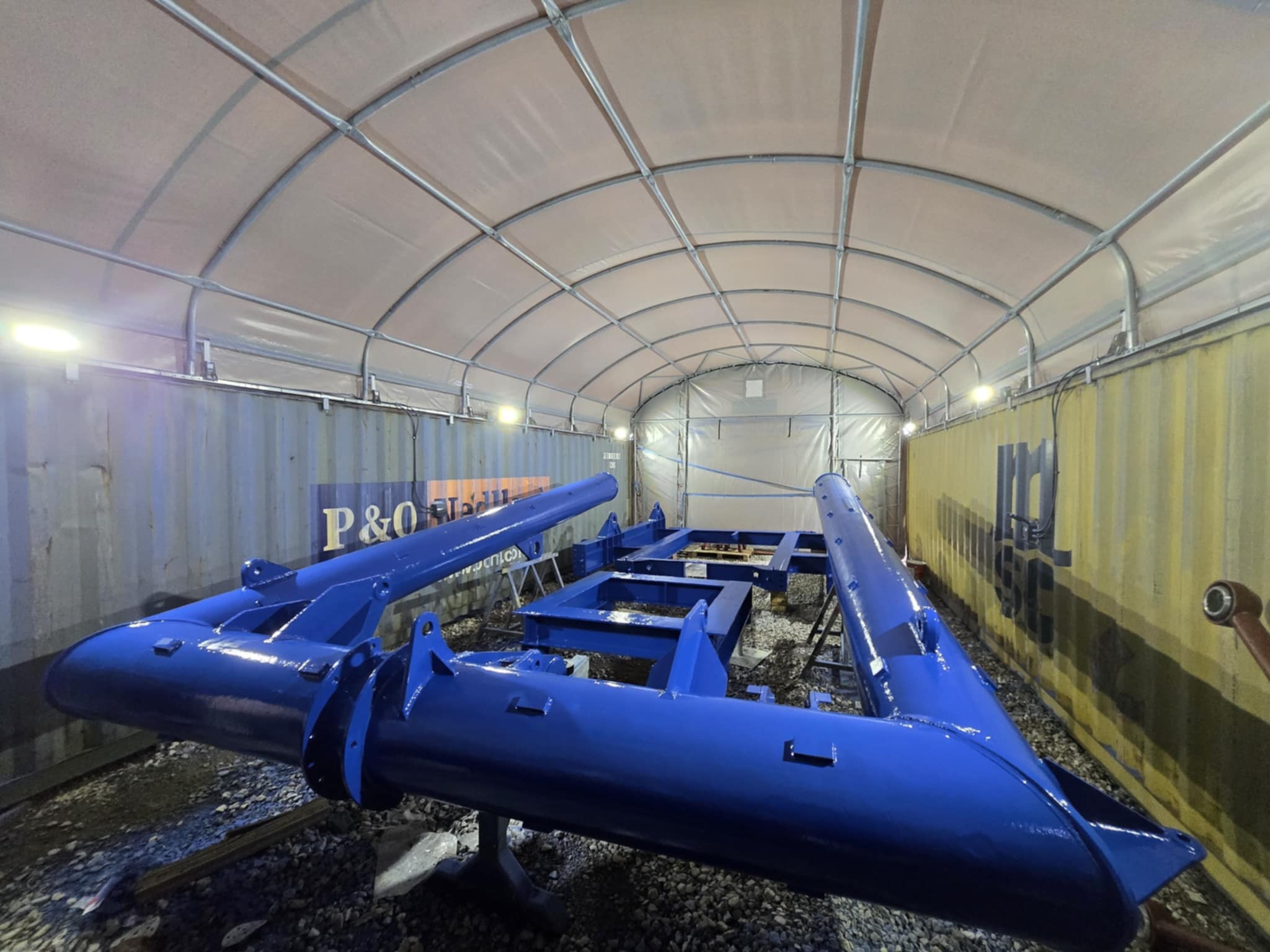
Two pack paints are made from two components – a base resin and a hardener – that are mixed together before use. This triggers a chemical reaction, forming a dense, durable, cross-linked film. It’s more complex to apply, but it creates a tough, long lasting finish.
Single pack paints
Single pack paints, such as acrylic enamel, come pre-mixed in one container. It cures by air drying or solvent evaporation. They are therefore easier to apply and cost less than two pack paints, but they generally offer less durability and resistance. They may need a primer for better durability and adhesion.
At the end of the day, the primary goal of industrial paint is to protect the underlying substrate. Making a decision between single and two pack painting will come down to the level of protection you need.
Got an industrial cleaning or painting problem? We can help.
Key differences between single pack and two pack painting
When to use two pack paint
Two pack paints are ideal when you need maximum protection and performance, such as:
- Coastal or marine environments
- Industrial tanks and silos
- Chemical plants
- Heavy equipment or machinery exposed to weather, abrasion or chemicals
While they require skilled application and stricter Health & Safety precautions, two pack paints last longer, resist more, and reduce the need for frequent repaints – saving your site money over time.
Safety and handling
Two pack coatings demand strict safety precautions. Most two pack paints contain isocyanates, which are toxic and are a leading cause of occupational asthma. It’s essential that paint is applied in well-ventilated or controlled environments with appropriate PPE and safety planning.
Single pack paints are easier to apply, however they still contain solvents that can emit fumes during application and curing. It’s still important to ensure proper ventilation, follow manufacturer guidelines and wear appropriate PPE.
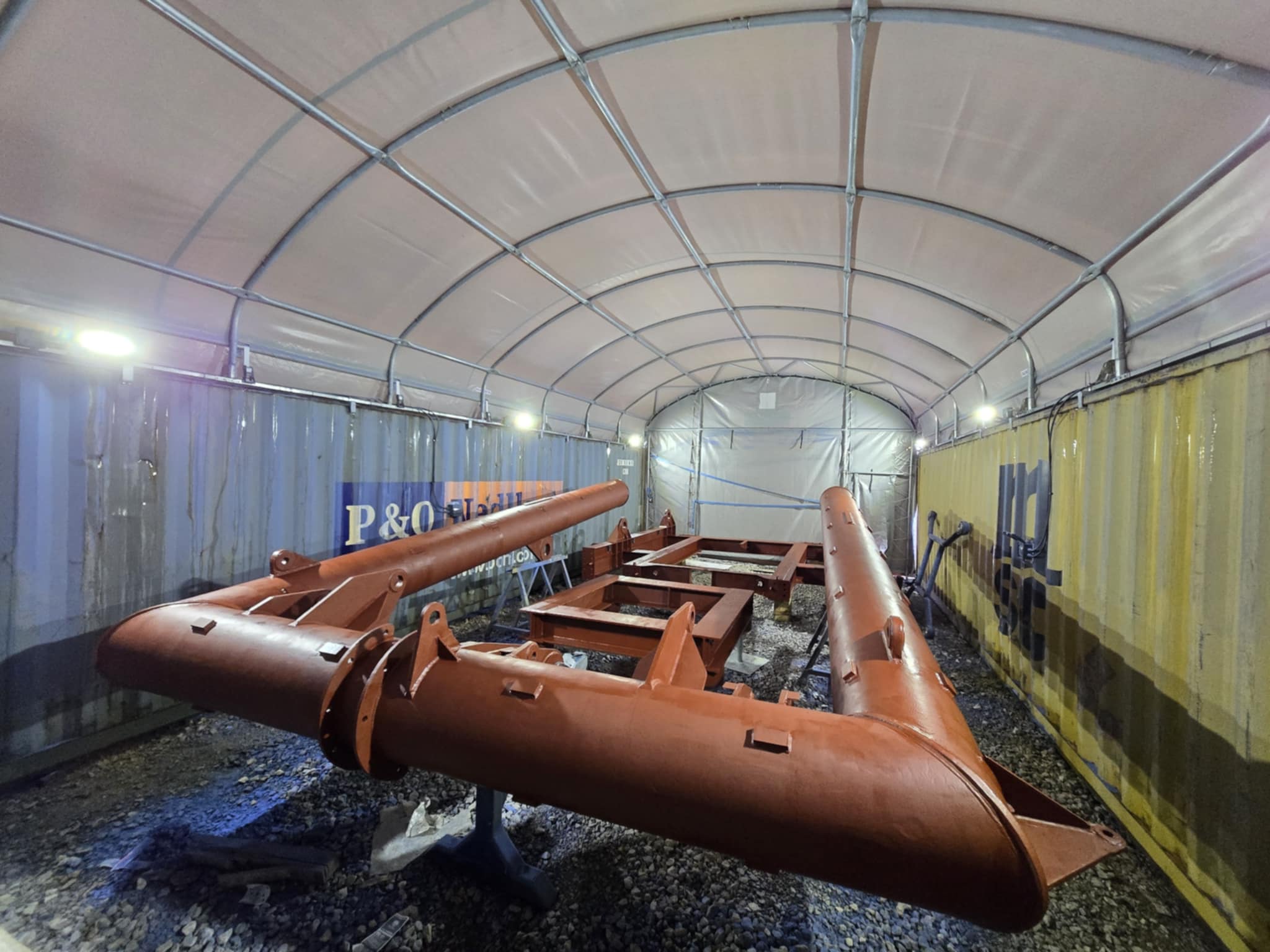
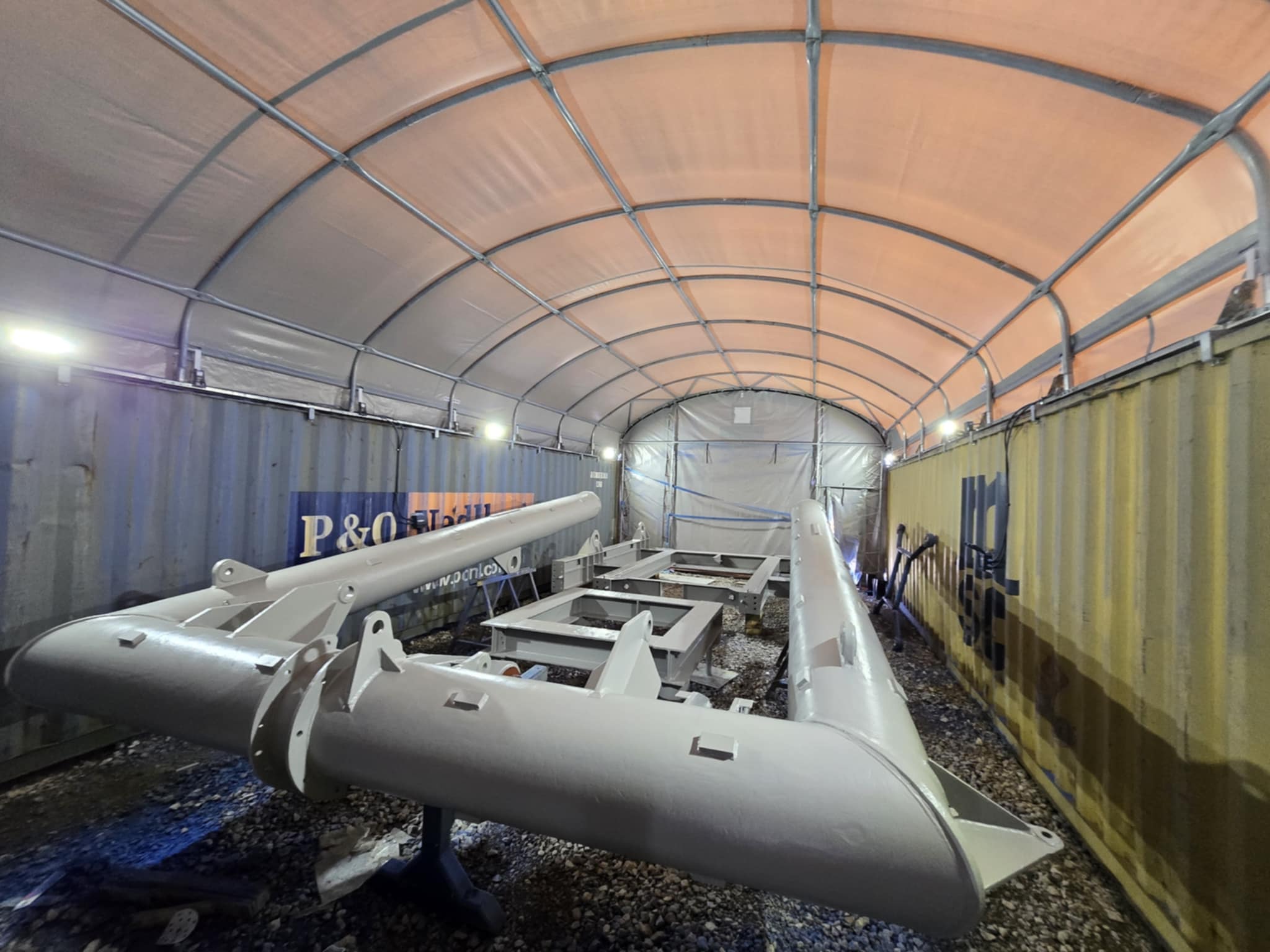
Common types of industrial paint
Here’s a quick overview of different types of industrial coatings, including two pack systems and other single pack options. As there are so many different types of paint, many of which can be made bespoke, it’s almost impossible to give a complete breakdown of every kind of industrial paint. However, there are rough categories of types of paint that have different properties and protection levels:
Epoxy (usually two pack)
- Excellent chemical and abrasion resistance
- Strong adhesion to metal, concrete and steel
- Often used on tanks as build coats for structural steel and submerged metal
- Not ideal for long term UV exposure as it chalks in sunlight
Polyurethane (two pack)
- High gloss and excellent UV/weather resistance
- Great for outdoor steelwork, equipment or tanks
- Flexible and durable – resists fading, flaking and chemicals
Acrylic paints
- Various formulations and so very versatile
- Can be water or solvent based for low Volatile Organic Compounds (VOCs)
- Quick drying with good colour retention
- Suitable for light to moderate protection
Zinc-rich primers
- Used as a base coat for corrosion protection
- Offers sacrificial protection for steel (zinc corrodes instead of steel)
- Often topped with epoxy or polyurethane systems
Intumescent paints
- Expands when exposed to heat, forming a protective char
- Used for fire protection on steel structures
- Often part of passive fire protection system in buildings
Chlorinated rubber paints
- Good for moderate chemical exposure
- Strong and resilient thermoplastic resin
- Often used on harbour equipment, tanks, bridges, agricultural equipment
Waterborne paints
- Lower VOCs and safer for the environment
- Less durable than solvent based paints, but the technology is improving over time
- Good for indoor or low-impact environments
FAQs
Are two pack paints better than single pack paints?
Not always – it depends on what level of protection you need. Two pack paints are better for harsh environments and long term protection, but one pack paints are fine for interiors or lighter duty jobs. Use two pack paints when you need superior toughness, chemical resistance or when you need a coating that lasts under heavy use.
Why are two pack paints more expensive?
They require significantly more skill to apply and contain hardeners that chemically cure. The costs reflect their durability and performance over time.
Do two pack paints need special safety measures?
Yes – many contain chemicals called isocyanates, which require appropriate masks and personal protective equipment. It’s essential that HSE guidelines are followed and that the paints are applied by trained operatives.
Conclusion; match the paint to the problem
Not all industrial paints are created equal. The best coating for your site will depend on your environment, what you need painting, the performance and protection needs, and your budget.
Single pack paints are more suited to lighter, low risk jobs where ease of application and cost savings matter most.
Use two pack paints when you need long lasting, high performance protection in tough environments – even if it costs more upfront.
In need of expert industrial painting services? Get in touch with our team today to discuss what kind of paint is best for your project.
Industrial Cleaning and Painting that works for you.
Get in touch for a free site consultation and project plan.
0330 043 3174
info@kingfisher-ss.co.uk
Our team here at Kingfisher have been in the industrial cleaning business for over 40 years. In that time we’ve built a reputation of being able to solve industrial cleaning problems where other companies have fallen short.
That’s because we will always source the highest quality equipment, materials and training to complete the project, often developing bespoke solutions for the trickiest of tasks.
0 Comments