KINGFISHER CLEAN BLOG
A Practical Guide on How to Protect Steel from Rust on Industrial Sites
When faced with protecting steel from corrosion, or removing rust that’s already developed, industrial managers also have to consider their site’s specific conditions, hazards and operational requirements, as well as the rust issue itself. Explore our practical guide below to learn how to protect steel from rust on your industrial site.
Contents: A practical guide on how to protect steel from rust on industrial sites
Introduction: The challenge of corrosion on industrial sites
Step 1: Understanding your environment
Step 2: Consider site specific logistical challenges
Step 3: Surface preparation
Step 4: Choose the most appropriate paint system
A practical checklist
FAQs

The challenge of corrosion on industrial sites
Steel is one of the most widely used structural materials across industrial sites, however without the right protection, it is continually susceptible to rust. Conditions on industrial sites can be especially hazardous and can accelerate the corrosion process significantly, for instance chemical exposure, moisture, salts, heat, or atmospheric pollutants.
The challenge for industrial managers is understanding not just how to protect steelwork, but how to navigate site specific conditions and hazards which may impact safety and operations. This practical guide breaks down the key considerations and practical steps involved to appropriately protect steel from rust with expert and safety-led industrial painting, with case studies of different projects from our expert team of painters.
Step 1: understanding your environment
The international standard for protecting steel structures from corrosion (ISO 12944) categorises environments according to their susceptibility to rust development, namely pollution levels, humidity, and salinity. This allows one to determine the appropriate paint system needed to adequately protect steel from its surrounding environment. Environments are classified from C1 (low risk) to CX (extreme risk), which we explore in greater detail here.

It is therefore important to assess the “micro climate” surrounding the steel in question. Factors to consider could be:
- Exposure to harsh chemicals
- Salts, especially for coastal sites
- Relative humidity
- “Time of wetness”, i.e. the total time during which a surface is exposed to rainfall, condensation, or moisture
- Indoor vs outdoor environments
- Design challenges, for instance narrow areas where dust, dirt, and moisture can get trapped
- Access challenges, especially around pipework, machinery, and other infrastructure
Case study:
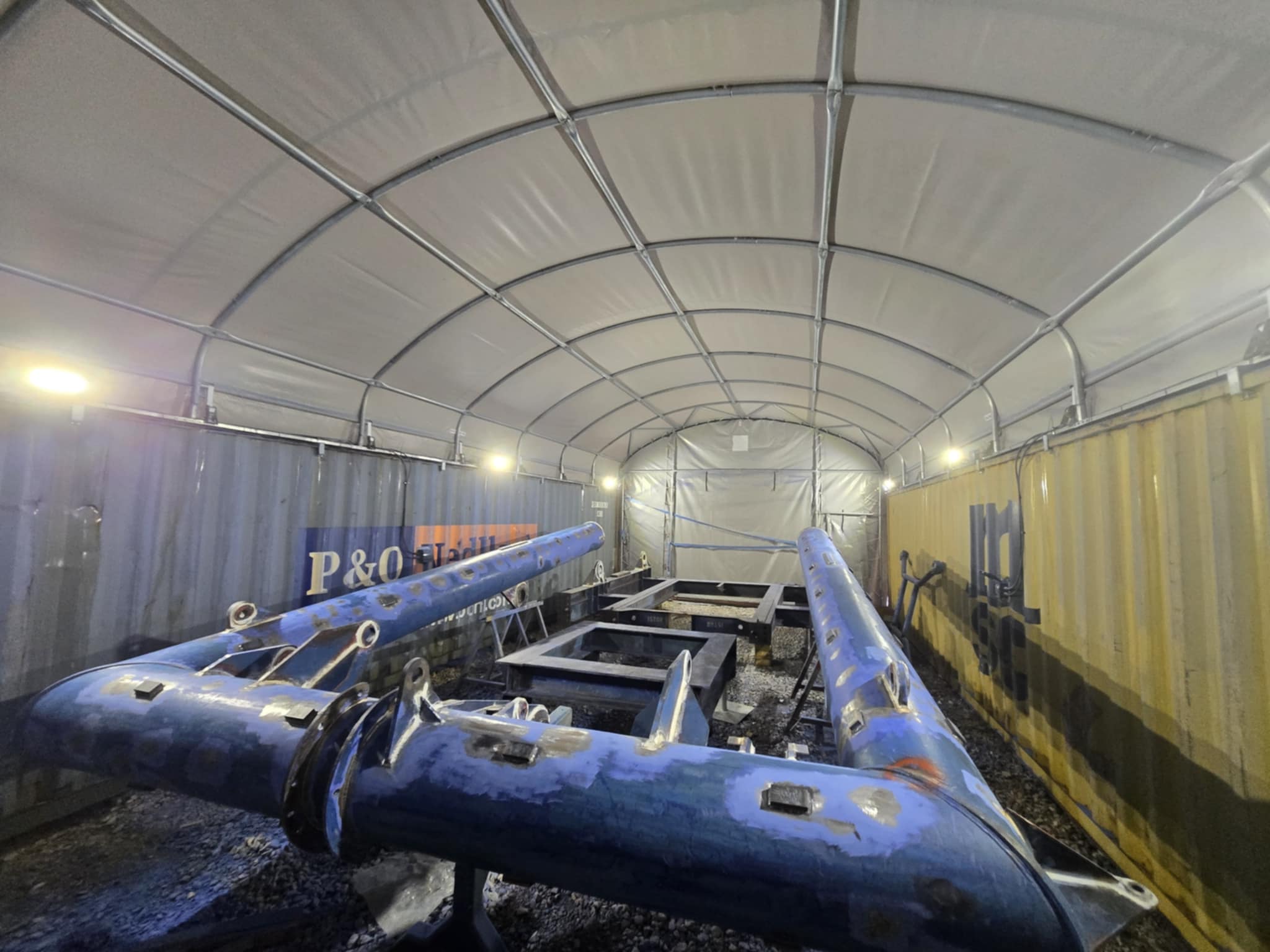
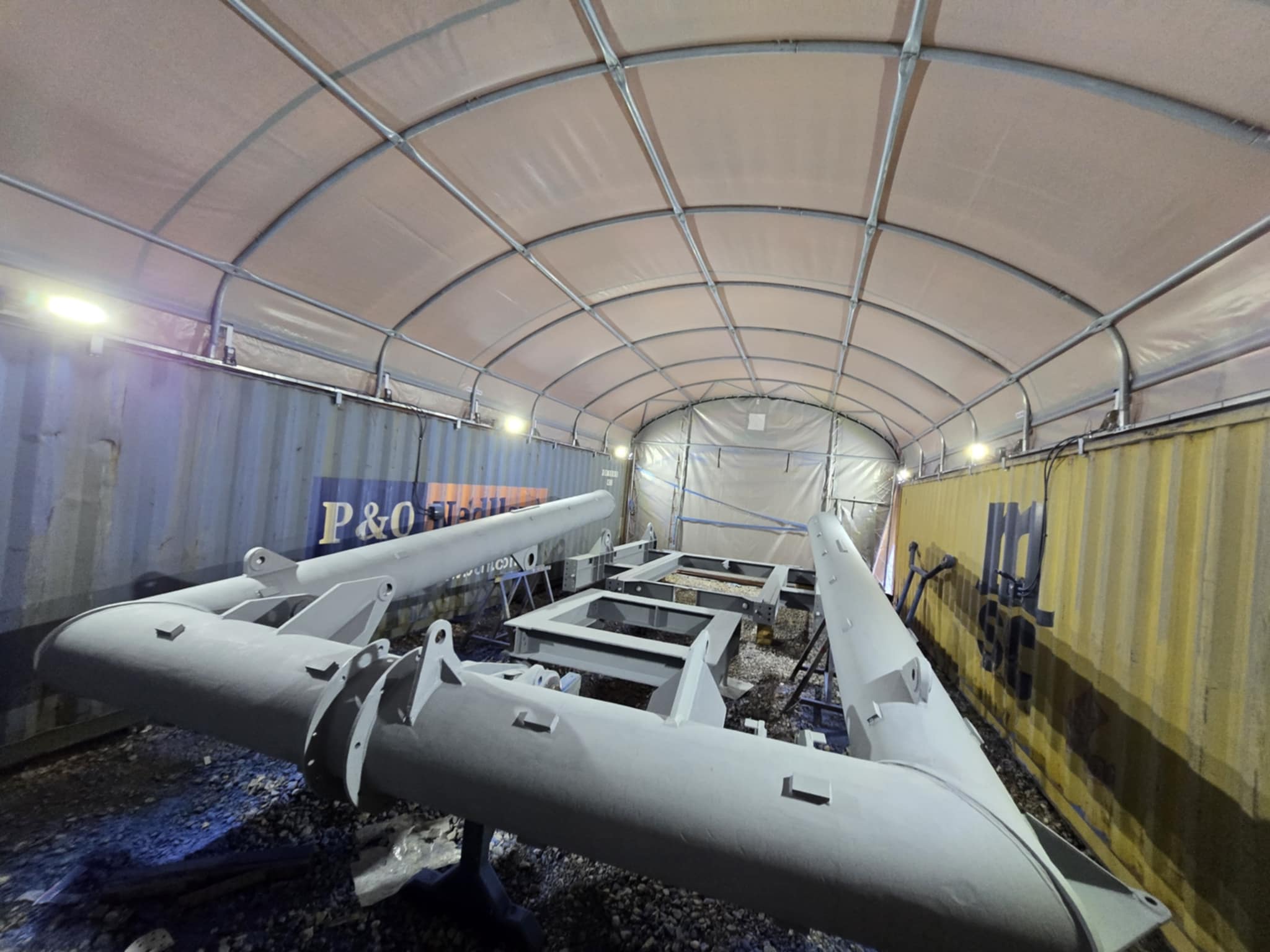
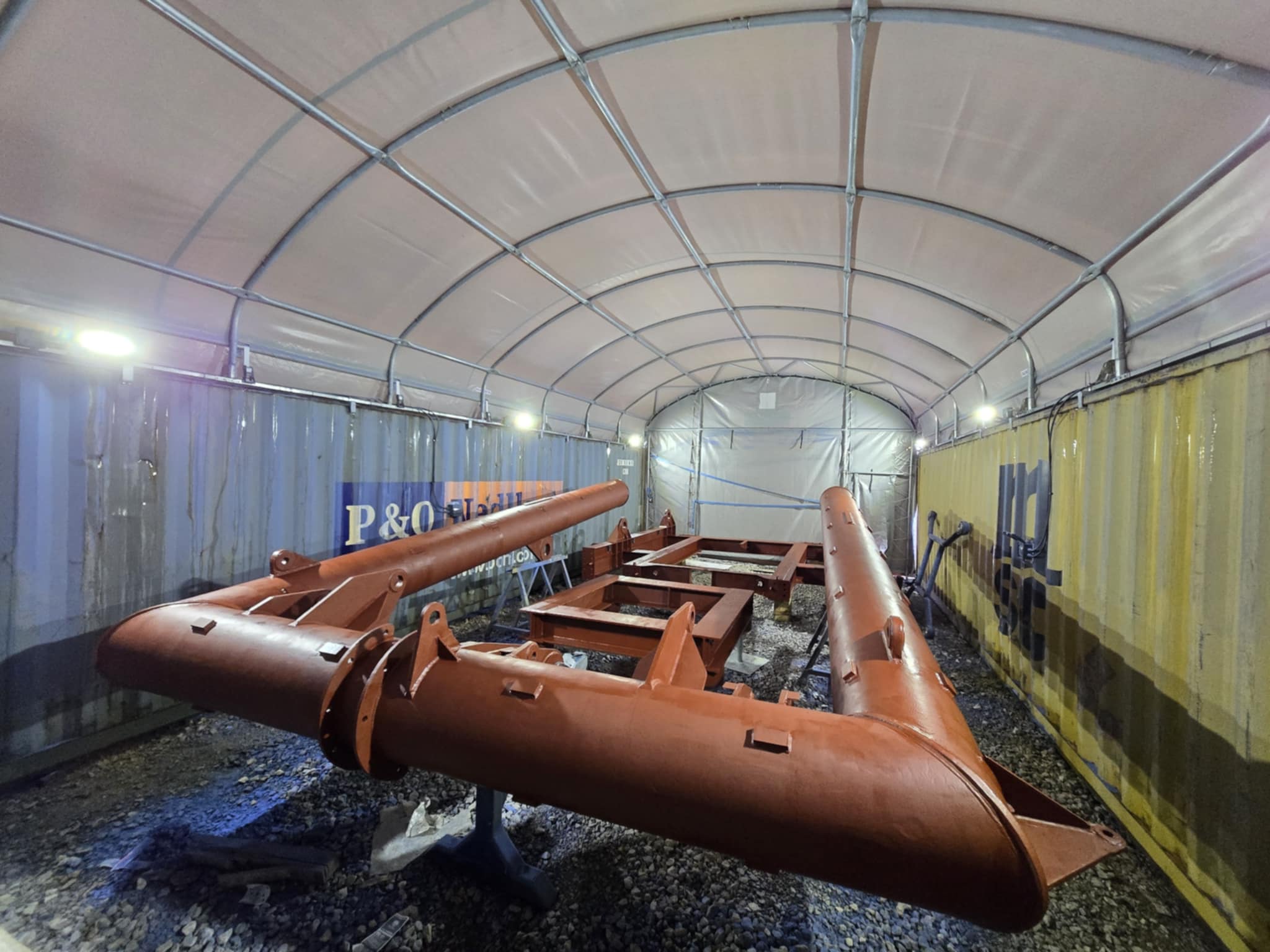
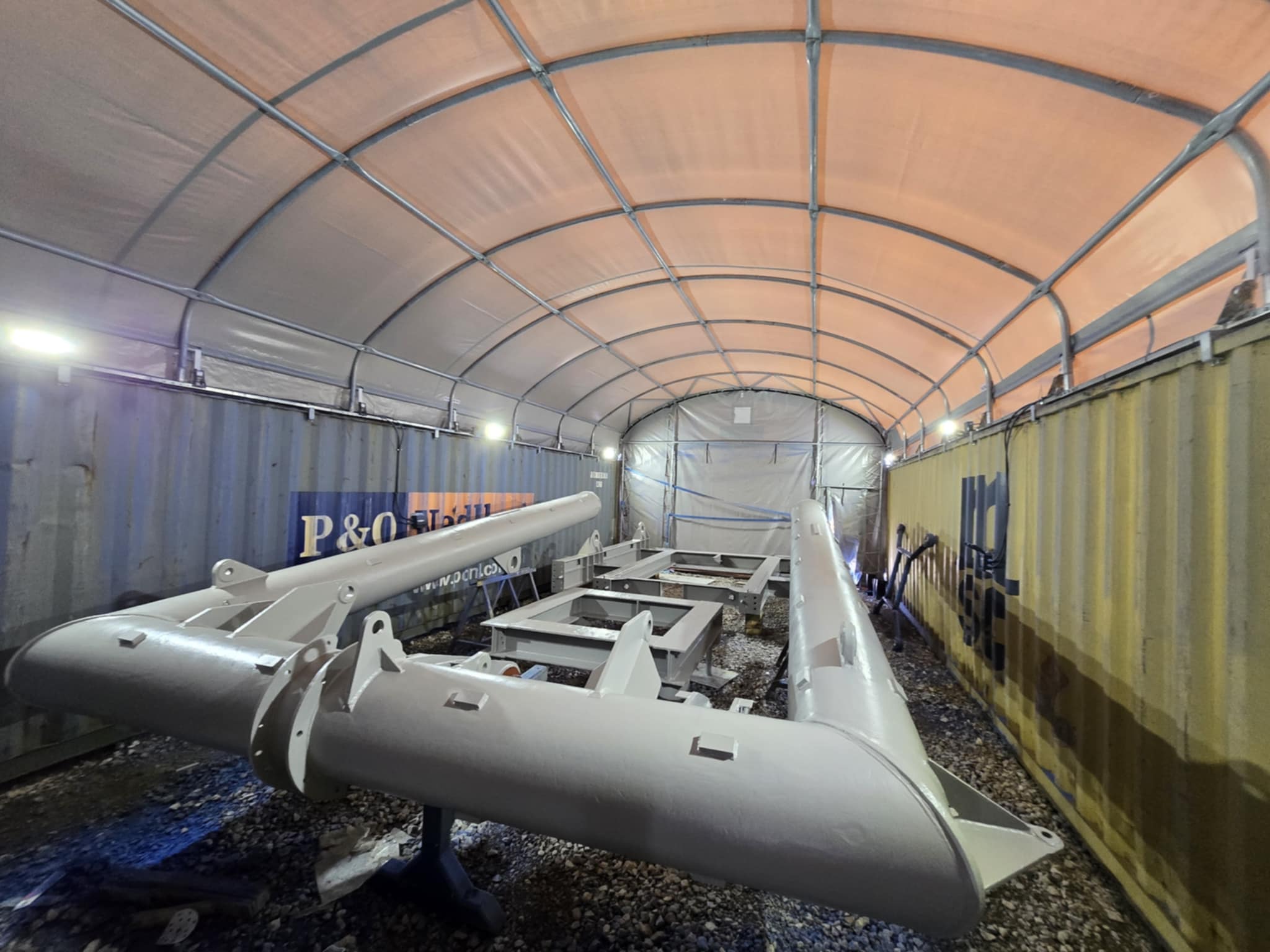
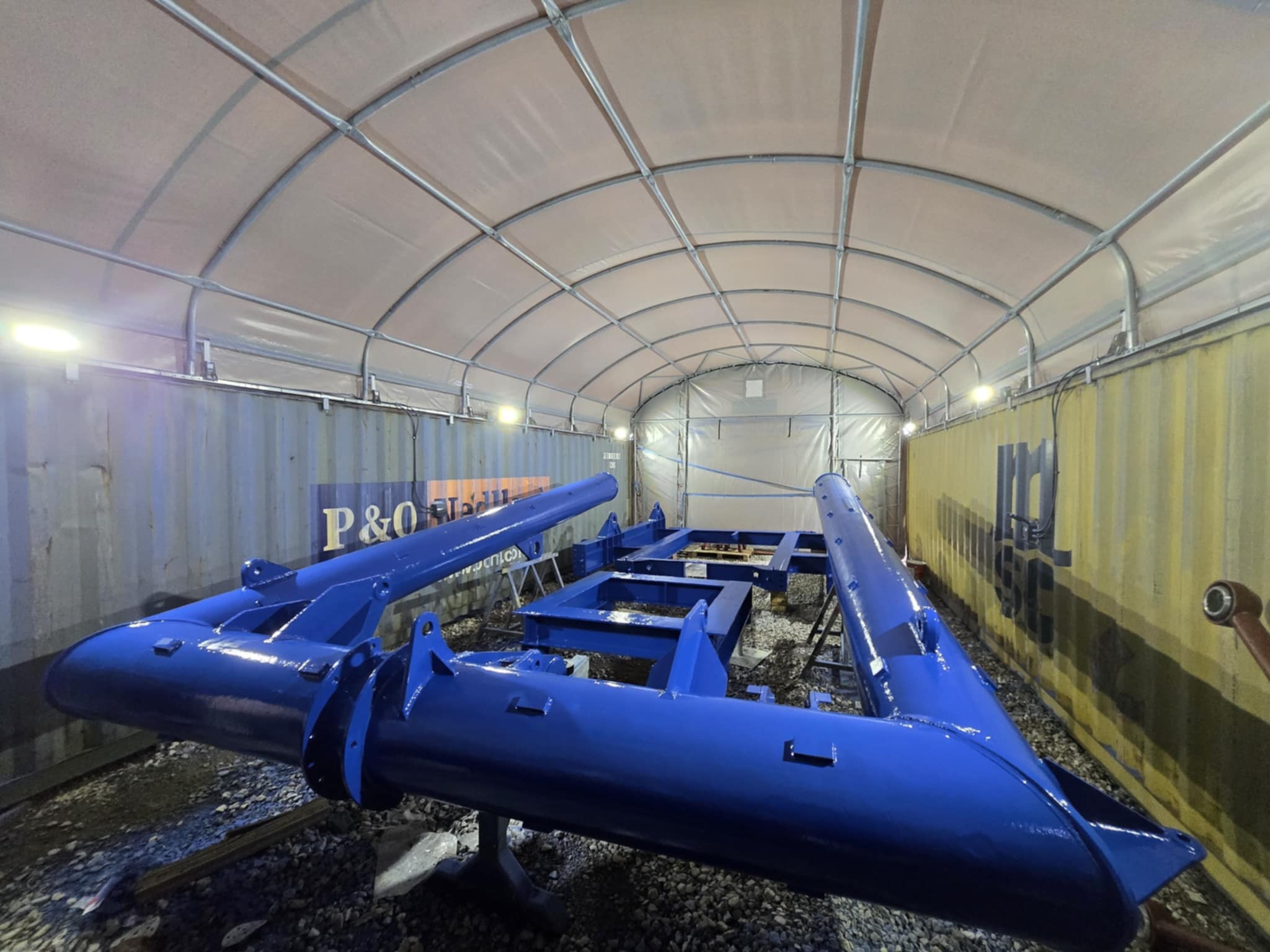
Our team recently completed a painting project for a manufacturer in the marine industry, where the steel in question was exposed to humid and salty environments. This required diligent planning, with heavy-duty two pack paints. Our team applied a comprehensive four-coat paint system designed to adequately protect the steel within a marine environment.
Step 2: Consider site specific logistical challenges
Maintaining and painting steel structures on industrial sites is not as easy as preparing fresh steel straight after fabrication. Painting steel in situ means navigating around obstacles in a cramped, inaccessible, or hazardous area, not to mention being on a busy industrial site with traffic and moving machinery.
Proficient industrial painting companies are adept at working with clients to logistically manage painting projects around day-to-day operations. Factors to consider might include:
- Access challenges
- Working around complex and crowded areas, e.g. pipework, machinery, or steelwork, especially in ceiling areas, along walls, or around production machinery
- Potential contamination to products, e.g. loose material falling onto storage or production lines below
- Working around active production areas
- Scheduling work during quieter periods or shutdowns
- Site specific Health & Safety challenges
- Site traffic, e.g. HGVs, forklifts, employees
Case study:
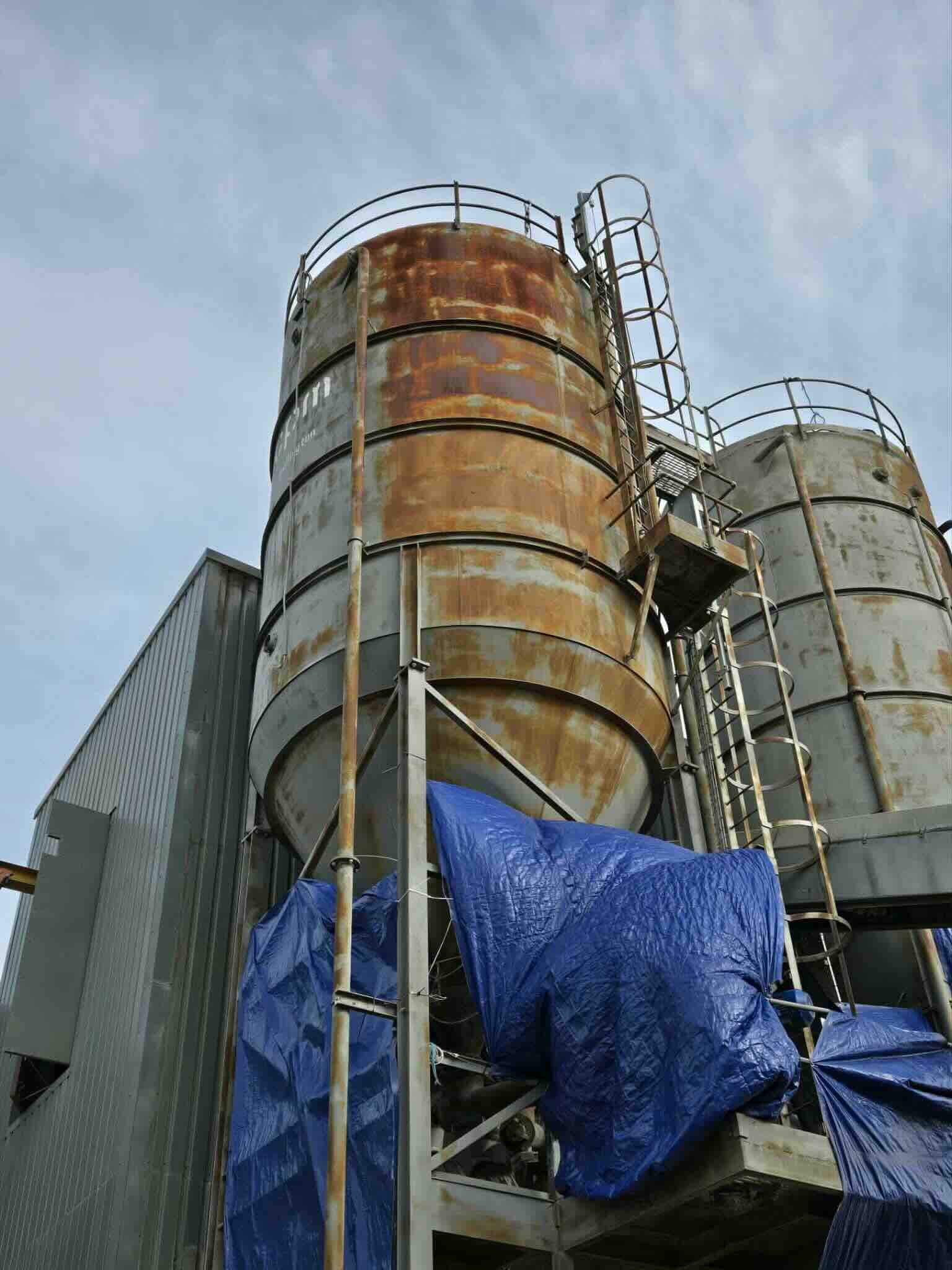
A recent silo painting project involved our team logistically working around regular product deliveries, which needed to be unloaded into the silos in order for our client’s operations to remain undisrupted.
Industrial painting projects on busy sites aren’t just a case of “turn up and crack on” – they require careful planning and ongoing communication with clients, as circumstances can change quickly. This is as important for Health & Safety as it is for ensuring minimal interruptions to our client’s day to day function.


Step 3: Surface preparation
Surface preparation is arguably the most important stage of an industrial painting project. Even the best and most expensive paint system will fail without proper surface prep.
ISO 12944 specifies different levels of abrasive blasting preparation prior to applying protective coating systems. Abrasive blasting effectively removes rust and mill scale, while also providing a mechanical key with “peaks and valleys,” which gives the primer a greater surface area to adhere to.
However, there are other ways of preparing steel prior to painting, which offer different Health & Safety and logistical benefits compared to traditional abrasive blasting. We explore our approach to mechanical surface preparation in greater detail in this blog post.
Portable and mechanical tools have advantages over abrasive blasting when working at height, which presents multiple challenges. When working over machinery, stored materials, or production areas, waste abrasive particles can disperse over a wide area, contaminating areas below and making subsequent clean up and disposal difficult.
Case study:
A recent outdoor steelwork painting project involved preparing and painting framework for a high-level stairway that had suffered significant corrosion. Abrasive blasting at this high level would have dispersed the particulate great distances, therefore surfaces were prepared mechanically. The framework was then treated and applied with rust inhibiting industrial paint products. This approach ensured high quality results along with comprehensive Health & Safety provision.


Step 4: Choose the most appropriate paint system
There are a wide variety of industrial paint products suitable for different environments and specifications. They are broadly divided into two categories, single pack and two pack paints, which we explore in greater detail in this blog post. Both offer a different variety of features and capabilities such as temperature resistance or rust inhibition. However, the most robust protection for highly corrosive environments are multi-layer two pack paint systems, which are broadly split into three steps: a zinc rich primer, intermediate epoxy build coats (usually 2), and a polyurethane top coat.
Compared to hot dip galvanising or thermal metal spraying, high performance industrial painting is the most flexible option for on-site application.
Case study:
A recent pipework painting project involved preparing and painting a series of indoor and outdoor pipework that had rusted over time. We collaborated with our specialist industrial paint supplier to identify the best paint products to meet the food-safe requirements set by our client. The work involved manoeuvring around cramped areas with multiple other pieces of machinery and pipework, which our operatives handled expertly. Our team were able to successfully restore the pipework and apply an aesthetic coat of industrial strength paint with food-safe capabilities.


A practical checklist for industrial managers to protect steel from rust
- Assess your environment to determine your corrosivity level
- Identify high risk areas and site-specific hazards
- Partner with experienced industrial painting contractors
- Ensure proper surface preparation
- Choose an appropriate coating system
FAQs
What’s the best way to protect steel from rust on industrial sites?
The best method depends on the environment the steel is exposed to. There’s no single solution that works for every site. For most industrial applications, protection will either involve industrial strength single pack paints or high performance, multi-coat two pack systems for more intensive environments. The key consideration is matching the protection required to the corrosivity level of your site, as defined by ISO 12944.
How do I know what level of corrosion protection my site needs?
You first need to assess the corrosivity category of your environment, ranging from C1 (low) to CX (extreme). This is influenced by:
- Humidity and moisture levels
- Exposure to chemicals
- Atmospheric pollution
- Heat
- Indoor vs outdoor exposure
Can you paint over rusted steel?
Yes, but only when rust has been properly removed and treated. Painting directly over loose or heavy rust without adequate preparation will lead to rapid failure of the coating.
What causes steel to corrode faster in some industrial areas?
Some areas of an industrial facility might be exposed to harsh chemicals, acids, constant moisture or condensation, extreme heat, pollutive or salty atmospheres, or airborne particles. All these factors can advance the corrosion process significantly.
Do I need a professional contractor for industrial steel painting?
For most industrial environments, yes. Industrial painting contractors are experienced at providing a high value service with stringent Health & Safety measures, and are experienced in how to treat and protect steel from rust.
Industrial Cleaning and Painting that works for you.
Get in touch for a free site consultation and project plan.
0330 043 3174
info@kingfisher-ss.co.uk
Our team here at Kingfisher have been in the industrial cleaning business for over 40 years. In that time we’ve built a reputation of being able to solve industrial cleaning problems where other companies have fallen short.
That’s because we will always source the highest quality equipment, materials and training to complete the project, often developing bespoke solutions for the trickiest of tasks.
0 Comments