KINGFISHER CLEAN BLOG
How to Clean Up After a Factory Fire
If you’ve recently had a factory fire at your industrial facility, you may be feeling at a loose end as to how to get back to production. Read on for a step by step checklist, as well as some top tips for safety, effectively and compliantly cleaning up after the incident.
Contents
1. Facing the aftermath of a fire – and restoring your site safely and efficiently
2. What to do after a factory fire: a checklist
3. Why it’s best to partner with industrial cleaners after a factory fire
4. Clean up will depend on the type of factory and what you manufacture
5. How to clean up after a factory fire
6. Make sure you’re meeting environmental regulations

Facing the aftermath of a fire – and restoring your site safely and efficiently
Whether you are unfortunate enough to experience a fire either at home or at work, the consequences can be dire. Of course, there is the immediate risk to health and physical safety. However, in the fortunate circumstance where no one was hurt, there is now the physical building damage to contend with. This is where industrial fire damage cleaning comes in.
A fire in a factory or industrial environment can present an even greater challenge, due to the hazardous residues produced or the potential damage to infrastructure or machinery.
If you are unlucky enough to have had a fire at your facility, you may be feeling at a loose end as to how to start the clean up and repair process. Obviously, we understand that getting production restarted will be a top priority. Read on to discover how to go about the cleaning and restoration process at your site, so that you can get back to operations safely and as soon as possible.

What to do after a factory fire: a checklist
Some actions when dealing with a fire will be the same no matter whether it’s at home or in an industrial factory; i.e. calling the emergency services or your insurance. A fire in a factory, however, will require some extra steps and considerations before you can get back on your feet safely and, also, while complying with relevant regulations.
Have you just recently had a fire at your facility and are unsure where to get started? Check out some initial steps below, although this is by no means an exhaustive list:
Make sure the building is safe to enter:
The fire department, emergency response team or professional fire damage assessors will be able to tell you once the building is safe to enter. You may need to liaise with structural engineers to make sure that your infrastructure has not lost its integrity in the fire. Make sure to bring in trained electricians and technicians when reconnecting your gas, water and electricity in case any pipework or wiring has been damaged.
Ventilate the building:
It is essential to ventilate the area as soon as possible to allow any lingering smoke or hot gases to disperse. If safe to do so, open any doors, windows or roller shutter doors. If the fire has occurred within a large open space in your factory, the area may take some time to ventilate before it is deemed safe to enter.
Check and, if needed, replace fire equipment:
Check that systems such as fire alarms, sprinkler systems, fire doors, fire extinguishers etc. are in full working order.
Take lots of photos:
Before you move or throw anything away, take lots of photos so that you can make an accurate contents assessment for your insurer. Industrial cleaners will also take before and after photos of the physical space so that you can see the difference after a professional clean.
Secure the building:
Derelict or damaged buildings can be prime targets for thieves. If your building isn’t on an enclosed site, or doesn’t have a security gatehouse, then make sure that doors, windows and roof openings are secure.
Why it’s best to partner with industrial cleaners to clean up after a factory fire
Once your building has been deemed safe to enter, yourselves as industrial managers will most likely have your hands full with liaising with clients, stakeholders, insurance providers, etc. Partnering with professional cleaners allows all parties to get on with what they do best.
Factory fire clean up jobs require a mix of expertise, training and specialist equipment; not to mention PPE. Professional industrial cleaning companies will be able to dispose of hazardous waste safely, remove soot and ash residue, remove water from the emergency services’ efforts and return your facility to a safe and operable state.
Hazards facing both employees and cleaning contractors after a fire can include:

Clean up will depend on the type of factory and what you manufacture
Obviously, a fire at a pillow manufacturer will produce different debris to a fire at a factory producing electric car batteries.
The types of products that you manufacturer, as well as the environment in general, can lead to different hazardous materials, substances and debris. For instance, burnt plastic, melted scrap metal or chemicals will require particular care and attention to handle safely. This means that every fire damage cleaning project needs to take an individual approach to suit the nature of the site.
It is absolutely essential that the hazardous waste is handled and disposed of safely, in a way that both protects your employees’ health and also remains compliant with environmental legislation. That’s why we recommend that you partner with a specialist cleaning contractor that will ensure these high standards are met.
How to clean up after a factory fire
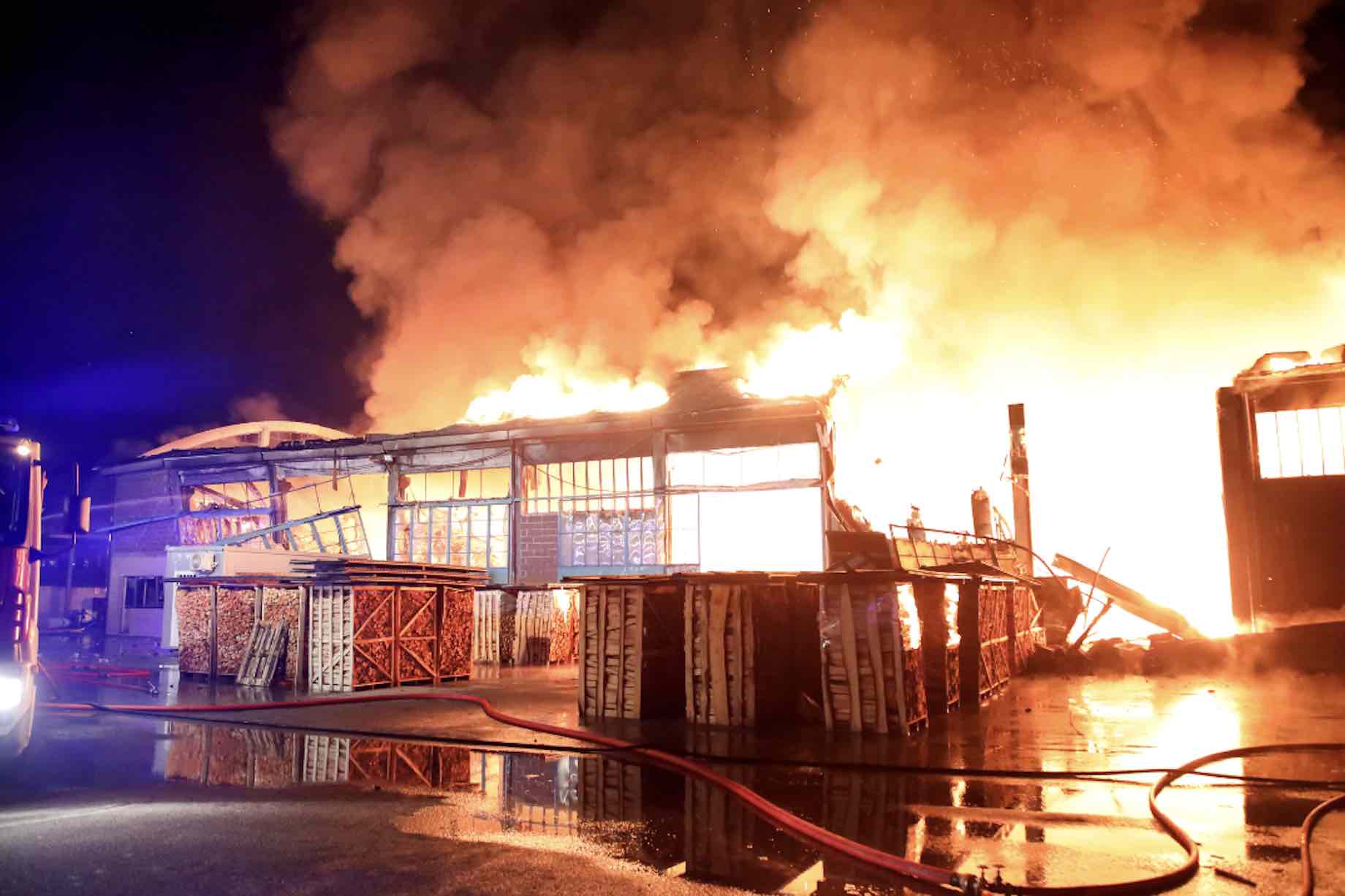
The aim of a factory fire clean up project would be to remove all traces of soot and ash, as well as removing hazardous waste safely.
Read on for some tips and considerations when embarking on a factory fire clean up job:
Remove water after the emergency services have left:
Depending on the efforts required by the fire emergency services, your factory may be faced with significant fire water that needs to be removed. It is important that this water isn’t left to contaminate the groundwater via conventional surface drains. High powered pumps and vacuums can be used for large scale water removal.
Remove soot and smoke residue:
After a fire, you’re likely to have layers of soot, ash and smoke residue covering almost every surface in the factory in the vicinity of a fire. We have attended factory fire clean up projects where soot has penetrated offices through closed doors, and every surface is still covered in soot. That’s why its important to thoroughly assess all areas and surfaces to see what needs cleaning.
It is important that dry cleaning methods are used for soot, as it can smear easily when in contact with moisture. The corrosive nature of soot can also mean that leaving even a small amount behind can cause further damage to the material. A professional industrial cleaning company will be able to use industrial vacuums (with the correct filters), specialist chemical rubber sponges and hazardous substance awareness training to remove as much soot and residue as possible.
Hazardous waste disposal:
Again, whether you are a pillow or electric car battery manufacturer, your facility will contain differing levels of hazardous waste. An industrial cleaning company will be able to identify, remove and dispose of hazardous substances safely and according to proper industry regulations.
Use of PPE:
Make sure that operatives undertaking cleaning wear appropriate respirators, protective suits, gloves, hard hats and eye protection due to the risk associated with soot, smoke residue, potentially hazardous substances.
Sealing off areas during cleaning:
It may be that areas of your facility need to be cleaned in turn and, consequently, need sealing off. This will prevent contamination from spreading to previously cleaned areas or from production areas. An industrial cleaning company can take this in their stride.
Make sure you’re meeting environmental regulations
As a business owner or responsible person within a company, you have a legal responsibility to ensure that fire damage cleaning meets environmental compliance; the fire emergency services, for example, isn’t responsible for getting rid of firewater.
Environmental risk reduction specialists will make sure that your fire damage restoration plans are compliant. This applies to; removing firewater safely so that it doesn’t contaminate the groundwater and therefore aquatic life, confirming and identifying any hazardous materials, and assessing the area for structural damage.
Of course, industrial cleaning contractors will ensure that their cleaning efforts are compliant with environmental legislation. Specialist cleaners can dispose of hazardous waste safely and appropriately, while using equipment and PPE that removes soot, ash and smoke residue.
Moving forward with confidence after a factory fire
Experiencing a factory fire can be overwhelming, but with a clear plan and the right approach, you can restore your facility and get back to business safely.
By addressing damage systematically—starting with safety, cleaning, repairs, and compliance checks—you can minimise downtime and ensure a smooth return to full operations. Partnering with a professional industrial cleaning company can alleviate some of these stresses, allowing you to get on with preparing to restart production.
As challenging as it may seem, the recovery process also presents an opportunity to reinforce safety measures and improve fire prevention protocols, making your facility even more resilient in the future. Remember, taking the time to do it right will pay off in the long run.
Industrial Cleaning and Painting that works for you.
Get in touch for a free site consultation and project plan.
0330 043 3174
info@kingfisher-ss.co.uk
Our team here at Kingfisher have been in the industrial cleaning business for over 40 years. In that time we’ve built a reputation of being able to solve industrial cleaning problems where other companies have fallen short.
That’s because we will always source the highest quality equipment, materials and training to complete the project, often developing bespoke solutions for the trickiest of tasks.
0 Comments